


If you live with one, it's normal that you've asked yourself this question more than once: Why do greyhounds sleep so much? Yes, at the same time, they are fast, athletic dogs with a reputation for needing exercise. The answer lies in how they expend their energy, their temperament, and how they regulate their rest. In most cases, a greyhound that sleeps many hours is neither sick nor bored: it is simply following a fairly common pattern within the breed. This is even more noticeable when they have a large bed where to rest.
Understanding this behavior helps avoid unnecessary worries and, at the same time, helps detect when that rest is within normal limits and when it's worth investigating further. Because it's not just about how many hours they sleep, but about how he sleeps, how he wakes up, and how he behaves when he is active.
Greyhounds typically alternate between periods of activity and long periods of rest. They are not hyperactive dogs indoors, although they can run with great intensity outdoors. This combination explains a good part of their daily routine.
| Factor | What does it mean in practice? | How it affects sleep |
| Athletic physiology | They exert intense effort in short periods. | They need more recovery time after the activity |
| Quiet temperament at home | They tend to relax a lot indoors | They spend more hours resting without that being a problem |
| Emotional sensitivity | They seek security, calm, and stable routines. | When they feel safe, they sleep more and better. |
| Age and history | A puppy, an adult, or a rescued greyhound does not rest in the same way. | The hours and depth of sleep can vary considerably |
| Body temperature and comfort | They are dogs that get cold easily and are very sensitive to their surroundings. | They look for comfortable beds and tend to rest a lot to maintain comfort. |
One of the most important reasons to understand Why do greyhounds sleep so much? The thing is, their energy doesn't work the same way as in other breeds. A greyhound can make a very explosive burst of effort in a short time, but that doesn't mean it needs constant movement all day long.
Your body is designed for running fast, not for continuous activity for hours. After the Greyhound walk, Whether from a game or a run, the most common reaction is to seek rest. This rest is part of muscle recovery and overall well-being.
Therefore, comparing a greyhound to more restless breeds indoors can be misleading. Some dogs need constant stimulation, while others, like the greyhound, appreciate quiet moments between activities.
In addition to the physical aspect, there is a very important emotional factor. Greyhounds are usually sensitive, observant dogs, and in many cases, very calm when they feel safe. When they have a stable routine, a comfortable bed, and an environment without excessive noise or tension, it's normal for them to relax deeply.
This is even more noticeable in adopted greyhounds. Many come from stressful backgrounds, have experienced abrupt changes, or lack quality sleep. When they finally find a stable environment, they may go through a phase where they sleep more than the family expected. Far from necessarily being a bad sign, it often indicates that the dog... She can finally let her guard down and truly rest..
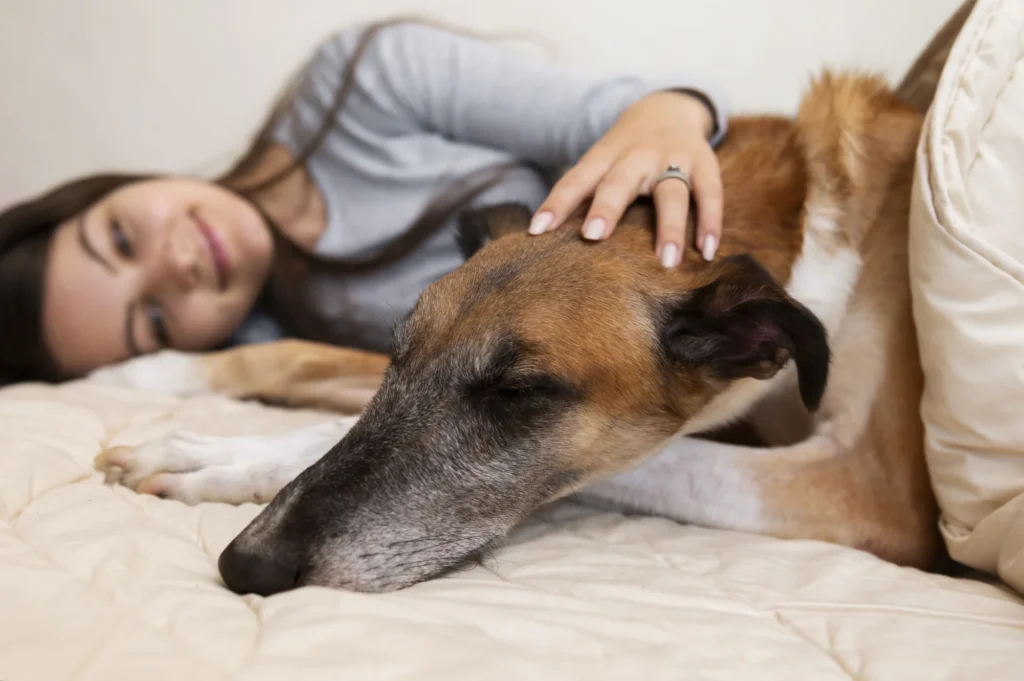
There's no single figure that applies to everyone, but many adult greyhounds can sleep between 12 and 18 hours a day, including deep sleep, naps, and rest periods. In puppies, senior dogs, or animals that have recently adapted to their new environment, that number can be even higher.
The important thing is not to obsess over the number, but to value the whole:
When these signs are present, sleeping a lot usually fits with a normal pattern.
Healthy sleep isn't measured solely by quantity. A greyhound that rests well often shows several positive signs when awake.
This is where the question about Why do greyhounds sleep so much? It ceases to be a curiosity and begins to require attention:
If the sleep is accompanied by any of these signs, it is wise to consult a veterinary professional.
Under normal circumstances, there are situations that can increase rest hours:
Greyhounds tend to be sensitive to the cold. When it's cold, they seek warmth and comfort, which means they spend more time lying down or dozing.
If you have run more, had an especially long walk, or experienced more stimuli than usual, you will need to recover.
In the first few weeks or months after an adoption, you may need to rest more. This is a way to manage stress and regain a sense of security.
A senior greyhound doesn't have the same pace as a young one. As the years go by, the body requires more rest and a slower recovery.
If you truly want to take care of their well-being, it's not enough to accept that they sleep a lot: you should also help them sleep better.
A well-balanced greyhound doesn't need to be entertained every minute. It needs a reasonable routine, appropriate exercise, and space to recover.
When someone searches Why do greyhounds sleep so much?, You usually want to know if you should be worried. In most cases, the answer is reassuring: sleeping many hours is part of their nature. They are athletic dogs, yes, but also very efficient in their use of energy, calm indoors, and especially grateful when they find a comfortable and safe environment.
The key is to look at the overall picture. If the greyhound rests a lot but eats well, moves normally, responds to stimuli, and maintains stable behavior, that sleep is probably part of a healthy state. If, however, excessive sleep is accompanied by lethargy or other symptoms, then it's worth investigating what's going on.