


The greyhound is one of the most fascinating dog breeds: athletic, sensitive, intelligent... and anatomically distinct. This difference, which makes it unique, also means that Taking care of your physical body is not easy.Certain muscle, joint, and skin injuries are more common in greyhounds than in other dog breeds. The reason? Their low body fat percentage, thin skin, and morphology designed for running.
Therefore, preventing and treating common injuries in greyhounds is something you need to know if you own one of these animals. And I'm not talking about avoiding physical pain, but rather ensuring they have the best possible quality of life, can move freely, and maintain their emotional balance (often affected by chronic pain).
From a biomechanical point of view, greyhounds are like a canine Formula 1. They are dogs that They run a lot with minimal effort, Thanks to their lean muscle mass, long bones, taut tendons, and a heart capable of pumping smoothly. However, this "functional perfection" isn't all that glitters; it comes with some risks.
Your muscles, being more exposed and less cushioned by subcutaneous fat, are likely to suffer microtears and contractures. Furthermore, their long, angled joints (especially the carpus, hock, and hip) make them more likely to become overstressed on uneven terrain or with sudden movements. And because their skin is so thin, they often suffer chafing from harnesses, ill-fitting collars, or abrasive surfaces.
Before telling you how to prevent and treat common injuries in greyhounds, let me tell you what the most common injuries are and how you can recognize them:
We're referring to contractures and micro-tears. These usually appear if you run intense races without warming up beforehand. The most common signs are a slight limp, stiffness upon standing up, or decreased willingness to move.
They are common in the limbs after quick turns or slips. They can be easily recognized by swelling, tenderness, or reluctance to put weight on the affected leg.
They are very common due to friction with rigid collars, abrasive floors, or even playing with other dogs. The skin may begin to turn red, with scabs or open wounds.
Like dysplasia or osteoarthritis, they can appear with age or after repeated trauma. Observe if your greyhound avoids certain movements or seems more "dull" after exercise.
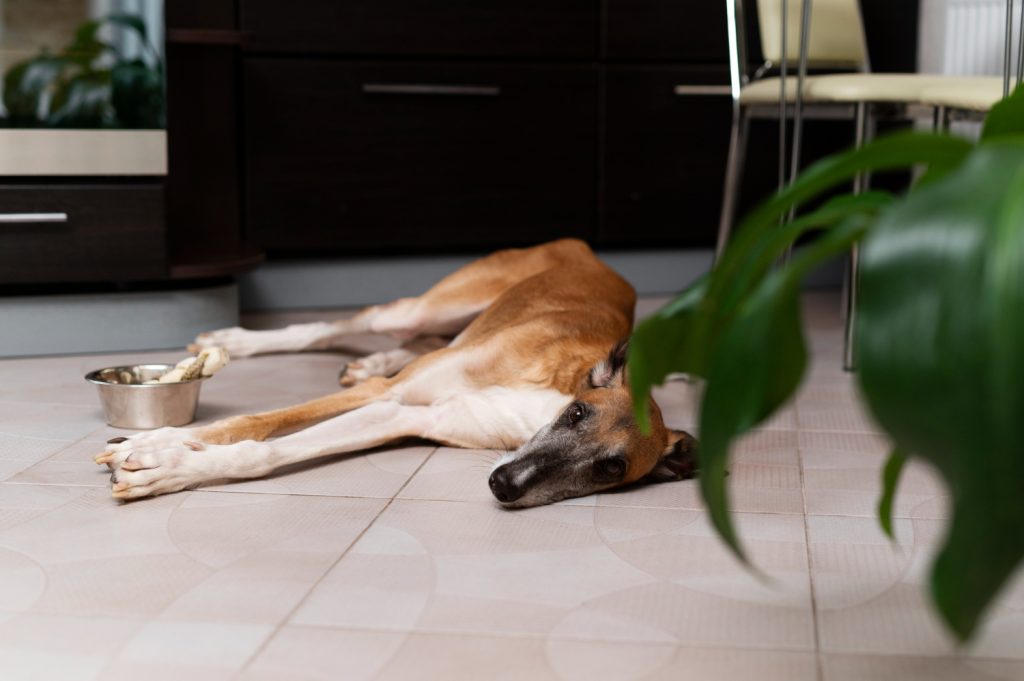
Prevention isn't just a matter of "not forcing"; it's an active strategy that combines equipment, environment, and observation.
Rest is also part of prevention. A bed that distributes weight evenly is key to avoiding unnecessary stress on the hips, shoulders, and spine. large bed Sleepy from The Blue Greyhound It's designed with plush materials and soft covers that respect the greyhound's delicate skin while providing orthopedic support. It's ideal and a must-have for your greyhound!
When your greyhound suffers an injury, the first step is to stop all physical activity and evaluate the injury. For minor injuries, such as a muscle strain, active rest (short, controlled walks) is usually sufficient. Applying local ice for the first two days, followed by moderate heat, can speed recovery.
If there is no improvement after 48 hours or if the greyhound shows signs of pain when walking, it is essential to see a veterinarian. Poorly healed joint or muscle injuries tend to become chronic, reducing the greyhound's future mobility.
During the process, the greyhound's environment must adapt For a faster recovery: easy walks with a harness, non-slip floors at home, soft surfaces to rest on… It may even be helpful to dress him in light clothing to maintain muscle heat without causing friction. cotton sweatshirts for greyhounds are a good option in these situations.
Once recovered from the injury, the goal must be clear: prevent relapses. The key is to keep the greyhound active, but balanced. Daily walks, games, and, if possible, activities such as proprioception (balance and body awareness exercises) can strengthen muscles and joints without overtaxing them. Furthermore, greyhounds are dogs that need to release energy, so we can't expect them to recover by lying around at home.
We know what it means to live with a greyhound: respecting its fragility, supporting its strength, and caring for what makes it unique. Want to pamper it the way it deserves? Take a look at our sales!